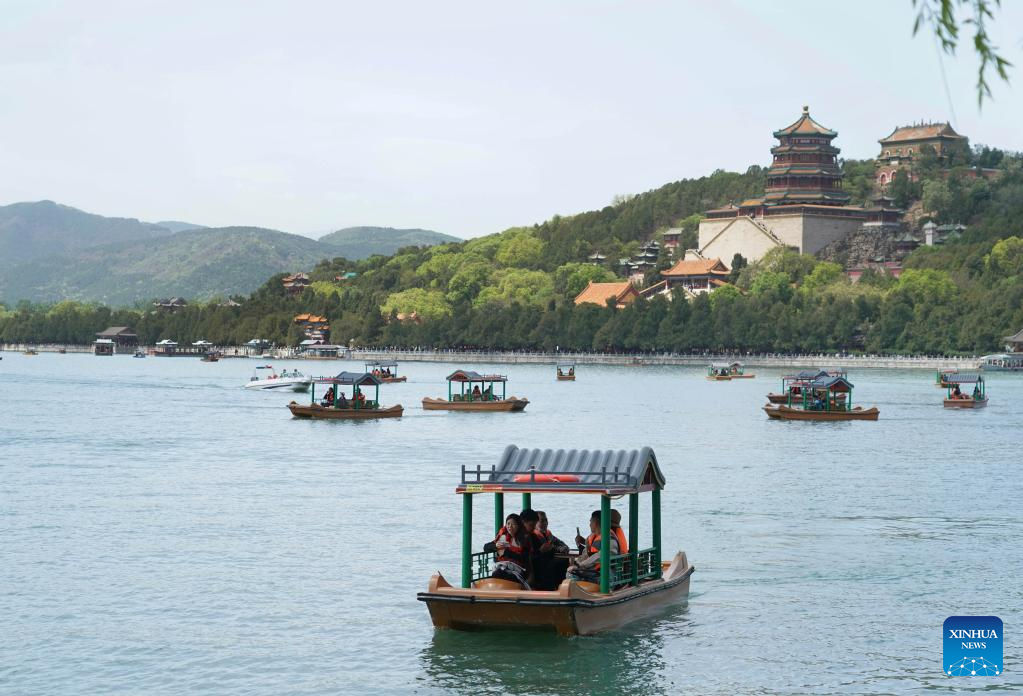
Summer Palace, an imperial garden in Beijing
Introduction
The Summer Palace, originally known as the Garden of Clear Ripples (Qingyi Yuan), is a historically significant imperial garden located in Beijing, China. It was constructed in 1750 by Emperor Qianlong of the Qing Dynasty to commemorate his mother's birthday. This garden is known for its notable representation of Chinese landscape garden design, blending human creativity with natural beauty in harmony. Over the centuries, it has served as a retreat for emperors and empresses, enhancing its cultural and historical value. The Summer Palace was officially recognized as a UNESCO World Heritage Site in November 1998, underscoring its significance as a cultural treasure.
History
The history of the Summer Palace is one of resilience and restoration. Initially constructed in 1750, it became a cherished imperial park for four generations of China's ruling elite. However, in 1860, during the Second Opium War, it was extensively damaged by the invading Anglo-French coalition troops. The subsequent rehabilitation took place in 1886, and it was renamed the Garden of the Preservation of Harmony (Yihe Yuan) in 1888.
In 1900, the Eight-Nation Alliance inflicted further devastation, but the garden was once again restored in 1902. After the establishment of the People's Republic of China in 1949, the Summer Palace underwent a series of renovations to preserve its historical and architectural integrity. Today, many of its scenic spots have been revitalized, including the Four Great Regions, Suzhou Street, Jingming Tower, Danningtang Hall, Wenchang Hall, and the Picture of Tilling and Weaving Scenic Area.
Architecture
The Summer Palace spans an area of 3.08 square kilometers, with Kunming Lake occupying three-fourths of the total area. This imperial garden is a masterpiece of Qing Dynasty garden design, incorporating various architectural styles and elements. The site is a testament to the Chinese gardening principle of "designing a garden as if it was naturally created."
Notable architectural features include the Seventeen-Arch Bridge, constructed in 1750, which spans 150 meters and is adorned with over 500 stone lions. The Tower of Buddhist Fragrance, built during the Qianlong reign, stands as a three-storey, 36.44-meter-high octagonal building enshrining a gilded statue of the 1000-armed Avalokitesvara. The Qingyan Boat, also referred to as Marble Boat, was built in 1755 during the twentieth year of the Qianlong reign of the Qing Dynasty. It underwent reconstruction in 1894 and was given its current name as per the wishes of Empress Dowager Cixi, symbolizing the concept of "clear rivers and abundant feasts". It is a 36-meter-long structure designed with stone as its frame, sitting on water. The Sea of Wisdom, commissioned by Emperor Qianlong, serves as a religious sanctuary with distinctive glazed tile decorations.
Gardens and Landscapes
The gardens and landscapes of the Summer Palace are a seamless fusion of natural beauty and human craftsmanship. The landscape is dominated by Kunming Lake, originally a natural reservoir that underwent expansion during the Qianlong Emperor's reign. It represents the traditional Chinese gardening practice of "one pool containing three fairy isles," with three man-made isles within the lake.
The Long Corridor, stretching 728 meters along the northern shore of Kunming Lake, is renowned for its more than 8,000 paintings depicting Chinese history and literature. This covered promenade connects various pavilions and offers a continuous journey through the garden's scenic beauty.
The Garden of Harmonious Pleasures, built in 1751 and modeled after the Garden of Lodging One's Expansive Feelings in Wuxi, Jiangsu province, features covered corridors and meandering paths that lead visitors through an ever-changing landscape of towers, pavilions, halls, and bridges.
Cultural Significance
The Summer Palace holds immense cultural significance as a symbol of Chinese imperial history and garden artistry. It reflects the evolution of Chinese architecture and design, incorporating diverse elements from various regions and ethnic groups. Kunming Lake, for instance, draws inspiration from West Lake in Hangzhou, while the architecture on Longevity Hill echoes Tibetan Buddhist influences.
Throughout the years, the Summer Palace has hosted cultural events and exhibitions that celebrate its rich heritage. During the Mid-Autumn Festival, visitors are treated to performances of Peking Opera and Kunqu Opera, enhancing the site's cultural vibrancy. Furthermore, the blooming of sweet osmanthus, a fragrant flower, has become a popular attraction, drawing visitors to appreciate its beauty and aroma.
Visitor Information
Today, the Summer Palace is a popular destination for both domestic and international tourists. Visitors can explore the vast gardens, admire the architectural wonders, and enjoy the serene ambiance that pervades the site. Seasonal events, such as the sweet osmanthus show, provide unique opportunities to experience the garden's charm in different seasons.
Guided tours are available to enhance the visitor experience, offering insights into the history and cultural significance of the Summer Palace. Additionally, the site has introduced an official calendar featuring stunning photographs of its ever-changing scenery, along with information about China's 24 solar terms, enriching visitors' understanding of the site's cultural context.
Conservation and Preservation Efforts
Conservation and preservation efforts have played a crucial role in maintaining the Summer Palace's historical and architectural integrity. Since the founding of the People's Republic of China, multiple renovations have been undertaken to restore and preserve the garden's key landmarks. In recent years, upgrades to the site's illumination systems have enhanced the garden's nighttime allure, allowing visitors to appreciate its beauty at all hours.
Volunteers have also been instrumental in preserving the site's cultural heritage. Through guided tours and educational programs, they help raise awareness about the importance of the Summer Palace as a UNESCO World Heritage Site. These efforts ensure that future generations can continue to enjoy and learn from this remarkable symbol of China's imperial past.








